
Reading time: 10 minutes
As we enter 2026, it’s time for an honest conversation about where Nigeria’s lighting industry stands.
Five years ago, we started Light Trybe with a simple idea: Nigerians deserve access to quality lighting products and solutions without the usual challenges. What we’ve discovered in that time is that the lighting industry in Nigeria is far more complex than most people realize.
Behind every light fixture that arrives at your door is a story of logistics coordination, quality control battles, supplier management, and constant problem-solving.
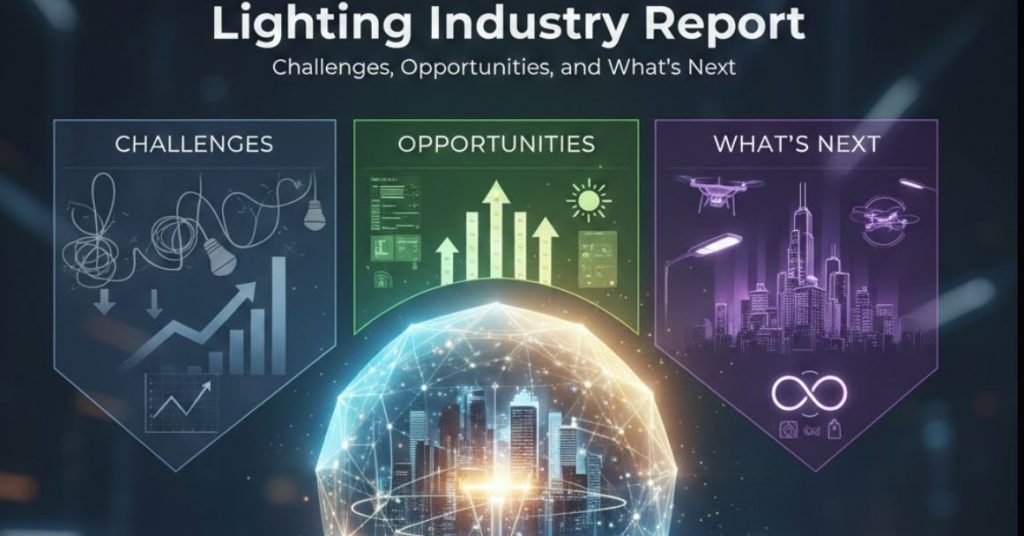
This is our 2026 industry address, our honest assessment of where the Nigerian lighting industry stands today, the real challenges we’re still facing, and the massive opportunities we see ahead.
If you’re a potential partner, customer, or just curious about what it takes to build a lighting business in Nigeria, this is for you.
The Challenges: What Makes Lighting Different in Nigeria
1. The Infrastructure Reality
Nigeria’s power situation fundamentally changes how lighting works here. Generators, inverters, voltage fluctuations, and power outages aren’t edge cases; they’re a daily reality for most Nigerian homes.
Not all lighting products are designed for this environment. Products optimized for stable 220V power in Europe or Asia can fail quickly when subjected to the voltage swings common in Nigerian electrical systems.
Why this matters: The cheapest lights on the market often work fine in countries with stable power. In Nigeria, they become expensive mistakes. This creates a trust issue when customers purchase what appears to be the same product elsewhere for less, only to have it fail within months.
What’s needed: Industry standards that account for Nigerian electrical realities. More suppliers are offering Nigeria-specific products designed for our power conditions. Better customer education about why certain products cost more because they’re built to last in our environment.
2. The Disposable Lighting Problem
A long-term customer once called us about up to 6 outdoor wall lights that had corroded and stopped working. His frustration wasn’t just about the failure; it was about the waste. “I could easily fix this if I could access the LED driver,” he said. “Or replace the LED strip inside. A simple ₦2,000 component failure just turned my ₦18,000 light into trash.” He was right, and we took note.
Up to 35% of lighting products develop faults over their lifetime. For outdoor fixtures exposed to Nigerian weather conditions, rain, humidity, dust, and heat, that number is even higher. In most cases, the core structure of the light is fine. It’s a single component that fails: the LED driver or circuit that powers the LEDs, the LED strip or bulb itself, a corroded connection point, or a weathered seal.
Most lights imported into Nigeria are designed to be disposable, not serviceable. Everything is sealed or permanently assembled. When one component fails, you can’t replace just that part. You throw away the entire fixture even if it costs ₦50,000, ₦100,000, or more.
A customer with a 1 million naira statement chandelier shouldn’t have to discard the entire fixture because a ₦5,000 LED driver failed, but that’s exactly what happens when products aren’t designed with serviceability in mind.
Why this matters for customers: You’re not just paying for a light fixture. You’re paying for something that might become expensive trash the moment one small component fails. This isn’t sustainable financially or environmentally.
Why this matters for the industry: The lighting companies that understand this problem and offer serviceable solutions will build deeper customer loyalty. Customers remember when you save them from having to rebuy a complete fixture.
What’s needed: Suppliers should prioritize lights with accessible, replaceable components. The industry needs technicians trained in lighting repair, not just installation. Companies should stock common replacement parts like LED drivers, strips, and connectors. Product design should account for Nigerian climate challenges in outdoor fixtures.
What we’re working on: This requires capacity, technical knowledge, parts inventory, and trained personnel. We’re building this capability now. The goal is that when your Light Trybe fixture develops a fault, we can repair it rather than replace it. It takes time and investment, but it’s the right direction for our customers and our industry.
3. The Quality Control Gap
Here’s the uncomfortable truth: 60% of orders from our suppliers require quality checks before we can ship to customers. Sometimes suppliers send what they have in stock rather than what we actually requested, hoping we won’t notice or won’t complain. Six out of ten times, something is wrong: wrong color, wrong wattage, or a product that looks similar but isn’t what we ordered.
This isn’t about bad suppliers alone. It’s about a supply chain that prioritizes moving inventory over precision. In a market where margins are tight and competition is fierce, some suppliers would rather ship fast and deal with returns later than verify orders carefully upfront.
Why this matters for customers: This is why we exist. Our role in the market is to be the quality gatekeeper. When you buy from Light Trybe, you’re paying for the fact that we caught the wrong wattage before it reached you. You’re paying for the returns we processed, so you don’t have to. You’re paying for the supplier conversations where we insist on getting it right.
Why this matters for the industry: Nigerians have been burned too many times by lighting purchases that don’t match the photos or don’t work as expected. This creates distrust that affects every legitimate business in the space. Quality control isn’t optional; it’s the foundation of customer confidence.
What we’re doing: Every product gets inspected before shipping. It slows us down and adds cost, but it’s non-negotiable. We’re also working directly with suppliers to implement better systems on their end, essentially training the supply chain to meet our standards.
4. The Education Barrier
Most Nigerians don’t know how to buy lighting. They know they need light, but they don’t know the difference between warm white and cool white, lumens from watts, or that the cheap light they bought will fail in six months because it can’t handle generator voltage fluctuations.
This creates a market problem: customers make purchase decisions based on price and appearance alone, then blame the industry when products don’t perform as expected.
Why this matters for everyone: Without educated customers, the market rewards the cheapest option, not the best option. Quality businesses struggle to compete with sellers who cut corners because customers can’t tell the difference until it’s too late.
What we’re doing: Our team spends hours weekly answering questions, creating guides, and explaining why certain products cost more. It’s not immediately profitable, but it’s essential for building a sustainable industry.
5. The Last-Mile Delivery Problem
Here’s something most lighting companies won’t tell you: delivery is the hardest part of our business. In Lagos, we promise 24-hour delivery, but the reality behind that promise is complex.
We work with third-party logistics providers who handle last-mile delivery, and on paper, the system should work. In practice, riders sometimes roam for hours, claim they can’t find addresses that exist, or delay deliveries, hoping for better-paying orders.
The result is deliveries that should arrive at 2 PM showing up at 10 PM. Customers get frustrated, we get blamed, and the rider moves on to the next order.
Why this matters for customers: When you order from Light Trybe, you’re not just paying for a light fixture. You’re paying for the coordination, follow-up calls, and pressure we put on logistics partners to ensure your order actually arrives.
Why this matters for the industry: Until Nigerian lighting companies invest in their own logistics infrastructure or technology solutions that give real-time tracking and accountability, this problem persists. It’s not permanent, but it requires investment that most small companies can’t afford yet.
What we’re doing: We’re exploring technology solutions that give us direct visibility into deliveries and hold riders accountable in real-time. The goal is to make 10 PM deliveries the rare exception, not the frustrated norm.
The interstate delivery problem is even worse. Lagos logistics, with all its challenges, is still manageable because of proximity and same-day expectations. Interstate delivery is where the system truly breaks down.
Unless we use premium services like GIG Logistics, which many customers won’t pay extra for, we’re often left with bus drivers as the delivery option. A bus driver assures you they’ll deliver to Abuja in 2 days, promises reliability, and seems trustworthy. You hand over the package. Then they stop picking up calls.
The package eventually gets dropped at some warehouse the customer has never heard of, with no notification and no address. The customer has to stress to figure out where their package is, navigate to an unfamiliar location, and sometimes beg rude warehouse attendants just to get what they paid for.
We once had a delivery to Abuja take two weeks for a package that was supposed to arrive in 3 days maximum. The customer was rightfully frustrated. They’d paid for their light fixture, waited patiently, called multiple times, and still had to hunt down their own package.
This isn’t the exception; it happens regularly with interstate deliveries outside premium logistics networks.
Why this matters: We promise 48-hour nationwide delivery, but we’re often at the mercy of unreliable systems. Customers blame us even though we’ve handed off to delivery partners on time. Premium logistics options exist, but add costs that many customers won’t pay. The alternative is bus drivers and informal networks, which are unreliable but affordable. We spend hours tracking, calling, and coordinating work that should be automated.
What’s needed: Affordable, reliable interstate logistics infrastructure. Until that exists, lighting companies are stuck choosing between expensive-but-reliable or cheap-but-chaotic. There’s no good middle ground yet.
The Deeper Challenge: Why Running a Lighting Business in Nigeria is Harder Than It Looks
The five challenges above are what customers see and experience. But there’s a deeper layer – the fundamental difficulties of sourcing and importing lighting products into Nigeria.
If you’ve ever wondered why quality lighting costs what it does, or why some lighting companies suddenly disappear from the market, this section explains why.
1. The International Supply Chain Maze
Most quality lighting products sold in Nigeria are imported, primarily from China. What looks simple on the surface, finding a supplier, ordering products, receiving them, and selling them, is actually a minefield that has destroyed many businesses.
2. The Supplier Fraud Problem
Here’s what nobody talks about: Chinese suppliers sometimes scam Nigerian business owners outright. We’re not talking about quality issues or delays. We’re talking about businesses that pay for an entire container of goods, sometimes millions of naira, and the supplier simply disappears. Or they take your deposit, promise delivery in 60 days, then stop responding to messages. Six months pass, a year passes, and your capital is gone. Your business is crippled.
This happens more often than the industry admits. For every successful lighting business operating today, there are probably two or three that failed because a supplier took their money and vanished. The financial hit isn’t just the lost capital. It’s the customers you can’t serve, the commitments you can’t honor, and the reputation damage.
Why does this happen? Distance and limited legal recourse. When a supplier in Guangzhou decides to stop responding to a Nigerian business owner, what recourse exists? Flying to China with no guarantee of finding them? Hiring Chinese lawyers for costs that exceed the lost deposit? Filing complaints with authorities in another country?
Most affected businesses simply absorb the loss and try to rebuild, if they can.
3. The Shipping Time vs Cost Dilemma
Even with honest suppliers, you face an impossible choice. Sea freight is affordable but agonizingly slow – taking 60-90 days, sometimes longer, with port delays in Lagos. It’s cheaper per unit, which keeps product prices competitive, but capital is tied up for months waiting for goods to arrive. There’s also the risk of container delays, port charges, and customs complications.
Air freight, on the other hand, arrives in 7-14 days but dramatically increases per-unit cost. This forces you to either inflate retail prices and lose price-sensitive customers or accept thin margins. It’s only viable for high-margin products or urgent restocks.
There’s no good option. Choose sea freight, and cash flow suffers for three months. Choose air freight, and prices become uncompetitive.
Most lighting businesses use sea freight and accept the cash flow pain. This is why new product launches take so long, why restocking popular items requires planning, and why running out of stock can take months to resolve.
4. The Capital Barrier
Here’s the brutal truth about starting a serious lighting import business: if you don’t have at least ₦50 million in capital, don’t bother going to China.
Why such a high number? Good suppliers with quality products and reasonable business practices require minimum order quantities (MOQs) that run into thousands of units, 30-50% deposit before manufacturing, payment of balance before shipping, additional capital for shipping, customs, port charges, and transportation, working capital while goods are in transit for 60-90 days, plus a buffer for unforeseen costs.
You can’t just order 50 pieces of one product. Quality suppliers want orders of 500, 1,000, 2,000 units across multiple product lines. The numbers add up quickly. Smaller orders mean you’re dealing with middlemen suppliers who add their markup or less established manufacturers who may or may not deliver quality or deliver at all.
This creates a vicious cycle: significant capital is needed to access good suppliers, good suppliers give you bulk pricing advantages and reliable delivery, but without capital, you’re stuck with expensive and unreliable options. This makes it harder to compete and grow capital, which keeps you locked out of better supplier relationships.
This capital barrier is why Nigerian lighting businesses often start small and stay small. Scaling requires either a massive personal investment or external funding, neither of which is easily accessible.
5. The Payment and Foreign Exchange Problem
Let’s say you’ve found a legitimate supplier and have the capital. Now you need to actually send money to China, and it’s not as simple as it sounds.
Many Chinese suppliers prefer bank transfers or Alibaba’s payment system, but Nigerian banks sometimes flag or delay international transfers. Payment platforms have transaction limits, some suppliers want Western Union or other methods that create additional costs, and wire transfer fees add up, especially for multiple transactions.
Then there’s the foreign exchange complication. You need dollars or yuan to pay Chinese suppliers, but the official exchange rate and black market rate can differ significantly. Banks have limits on foreign currency access, exchange rates fluctuate constantly. What you budgeted in naira might not be enough when you’re ready to pay, and FX scarcity in Nigeria can delay payments even when naira is available. This unpredictability makes financial planning nearly impossible.
The Middleman Solution
This is where companies like Middleman by Omolara Sani and Adeola Owosho are making a real difference. Rather than each business struggling independently with Chinese suppliers, international payments, and FX complications, Middleman provides infrastructure: verified supplier networks, simplified payment processes through their app, better FX rates through consolidated transactions, logistics coordination, and dispute resolution support.
We’re not affiliated with Middleman, but we acknowledge their role in making this industry more accessible. When payment and supplier verification become as simple as using an app, it lowers barriers for legitimate businesses and raises standards across the industry.
Companies that solve infrastructure problems like this help everyone. More businesses can enter the market with less risk, customers benefit from increased competition and better service, and the industry grows.
Why This Matters for 2026
Understanding these deeper challenges explains a lot about Nigeria’s lighting industry:
- Why do quality products cost what they do?
- Why do some businesses suddenly close without warning?
- Why do new products take months to appear in the market?
- Why are lighting companies cautious about expanding rapidly?
- Why does establishing trust with suppliers take years?
For potential partners and customers, this context matters. When you work with a lighting company that’s been operating successfully for years, you’re working with a business that has survived and solved these challenges.
For aspiring lighting entrepreneurs, this is the reality you’re signing up for. It’s not impossible – we and many others have built successful businesses despite these obstacles. But go in with your eyes open and your capital secured.
The Opportunities: Why We’re Excited About What’s Next
Despite these challenges, we’re more optimistic about Nigeria’s lighting industry than ever. Here’s why:
1. Lighting as Lifestyle, Not Just Utility
Something is shifting in how Nigerians think about lighting. Five years ago, lighting was functional; you needed to see in the dark, and that was it.
Today, we have customers asking about color temperature for mood lighting. They want dimmers for movie nights. They’re thinking about how lighting affects their Instagram photos. They care about design.
This is significant. When lighting becomes a lifestyle choice rather than a pure utility, people invest differently. They spend time researching. They’re willing to pay for quality. They understand value beyond just price.
We see this in every conversation: “I want my living room to feel like the hotels in Victoria Island.” “Can you make my bedroom look like what I saw on Pinterest?” “I want lighting that makes my home feel expensive.”
The opportunity: Nigerians are ready for premium lighting experiences. They’re excited about smart home integration and design-forward products that make a statement. The market is evolving from “I need a light” to “I need the right light.”
2. The Real Estate Boom
Nigeria’s real estate sector is exploding, and lighting is part of that story. New developments in Lagos, Abuja, and Port Harcourt. Estate homes that need full lighting packages and developers who want to differentiate their properties with quality fixtures.
But here’s what’s interesting: it’s not just high-end real estate. Middle-income housing estates are growing. Young professionals buying their first homes are treating lighting as part of the design process, not an afterthought. Even landlords are upgrading properties with better lighting to attract quality tenants.
The opportunity: Every new home is a lighting opportunity. Every renovation is a chance to upgrade. Every property developer looking to stand out needs lighting solutions.
The question isn’t whether the demand exists; it’s whether the lighting industry can meet it with the right products, reliable service, and trusted expertise.
3. The Power of Customer Education and Inspiration
The more we educate customers, the better decisions they make. Educated customers understand why long-lasting LED lights cost more upfront but save money over time. They know what color temperature means. They can spot quality. They ask the right questions.
This creates a virtuous cycle: better education leads to better purchases, better purchases lead to happier customers, and happier customers refer others and come back for more.
But education alone isn’t enough. Inspiration matters too. When customers see beautifully lit Nigerian homes, not just hotels or mansions, but spaces that look like theirs could look, they see possibilities and are willing to invest.
The opportunity: Content, showrooms, before-and-after stories, Instagram inspiration. The lighting company that combines education with inspiration wins. We’re building that capability systematically.
4. Technology Will Solve What Manual Processes Can’t
Remember those delivery and quality control challenges we mentioned? Technology is the answer. Real-time tracking that holds delivery partners accountable. Inventory management systems that prevent wrong products from shipping and customer portals that provide transparency at every step.
These solutions exist. They’re not cheap, but they’re increasingly accessible.
The opportunity: The lighting company that invests in technology first will create a service gap that competitors can’t close. Customers will pay premium prices for the peace of mind that comes with reliable delivery and guaranteed quality.
We’re not there yet, but we’re building toward it deliberately.
5. Partnerships That Scale
Lighting companies can’t do everything alone. Interior designers need reliable lighting partners. Architects want suppliers who understand their vision, and property developers need bulk solutions with consistent quality.
These partnerships are forming slowly, but they’re happening.
The opportunity: The lighting companies that position themselves as partners rather than just vendors will capture the B2B market. This requires reliability, professionalism, and industry expertise.
At Light Trybe, we’re actively cultivating these partnerships. If you’re an interior designer, architect, or developer reading this, let’s talk.
Looking Ahead: Building the Industry We Want to See in 2026
As we enter a new year, the Nigerian lighting industry is at an inflection point. Demand is growing. Customers are getting more sophisticated. Technology is becoming more accessible.
The infrastructure challenges remain, but they’re solvable.
What 2026 needs from our industry:
1. Industry Standards
Clear quality benchmarks, transparent sourcing, and honest product specifications. The cowboy operators hurt everyone’s reputation in the industry.
2. Investment in Infrastructure
Logistics, technology, and showrooms. Companies that invest now will dominate later.
3. Continued Customer Education
Every guide we publish, every question we answer, every installation we explain raises the entire industry’s bar.
4. Collaboration Over Competition
The Nigerian market is big enough for multiple quality players. Partnerships between designers, installers, and suppliers benefit everyone.
5. Nigeria-Specific Solutions
Stop importing products designed for European power grids and hoping they work here. Develop products for Nigerian conditions.
Our 2026 Commitment
As we begin this new year, Light Trybe remains committed to being part of the solution, not just documenting the problems.
That means:
- Investing in technology that solves delivery accountability issues
- Creating educational content that helps customers make informed decisions
- Building partnerships with designers and developers who share our quality standards
- Providing 24-hour Lagos delivery and 48-hour nationwide delivery, even when it’s hard
We’re not perfect. The challenges we’ve outlined affect us too. But we’re working on them systematically.
For Our Partners: Let’s Build Together
We understand:
- Timeline pressures on construction projects
- The importance of consistent quality across bulk orders
- Why product specifications matter
- That your reputation depends on reliable partners
Let’s talk about:
- Bulk pricing for your projects
- Exclusive product access
- Priority delivery for client projects
- Technical support and consultation
For Our Customers: Thank You
Every time you choose Light Trybe, you’re voting for quality over shortcuts. For transparency over excuses. For the industry we’re trying to build.
Your patience when delivery takes longer than promised helps us hold logistics partners accountable.
Your questions help us create better educational content.
Your feedback helps us improve.
Your referrals prove that quality matters.
Thank you for being part of this journey.
The Nigerian lighting industry in 2026 has challenges. But it also has incredible potential. We’re building toward that potential, one light fixture at a time.
From everyone at Light Trybe, Happy New Year. This year, we move forward with intention. 2026 is our Year of Shining Light.
Have questions about the industry or about lighting for your space? Reach out – we’re always happy to talk.
📞 0916 184 8660
📱 +234 705 877 9328
🌐 lighttrybe@gmail.com
Oluyemi Afuye
Keep shining with Light Trybe.